What You Usually Want to See in an Interview
Normally, the school does not look at learned answers, but at how your child behaves in conversation. Does she understand simple questions, whether she can tell about herself, name her age, family, favorite activities, colors, numbers, letters, or answer everyday questions like what is your name, how old are you, what do you like doing?
If your child does not answer long, it is not always a problem. Much more important is whether he can engage in dialogue, hear an adult, not freeze with fear and try to answer in his own words.
What questions can really meet
In an interview, a child is often asked to tell about himself, name a favorite toy, book or game, show colors, count, describe a picture, name animals, body parts or answer what he likes to eat, what he likes to play and what he can do.
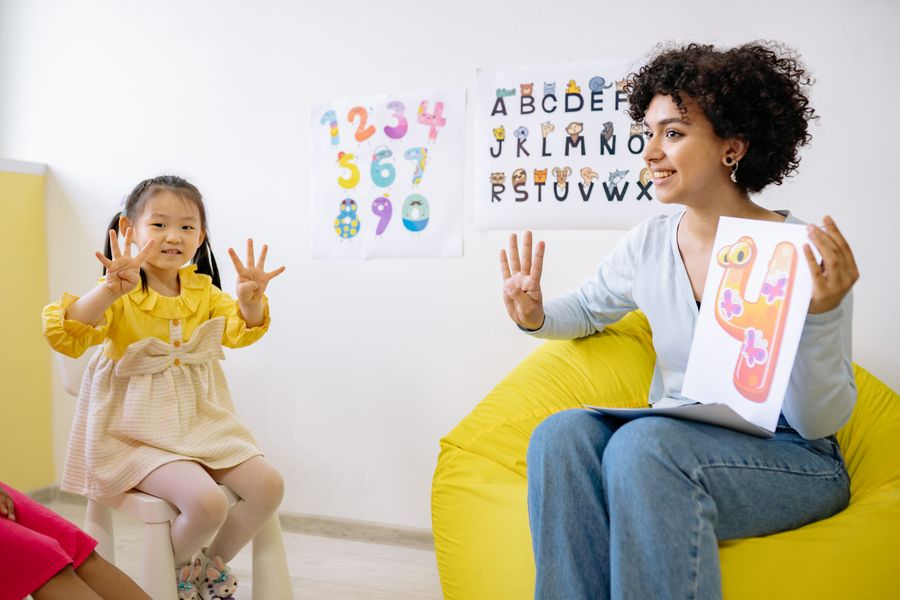
Sometimes they give a simple picture or a short task: show an object, choose an answer, understand a small instruction, repeat a phrase or tell what is happening in the image. All this tests not academic English, but the basic readiness of your child to understand and speak.
How to prepare your child calmly
Short rehearsals work best. You can play a mini-interview at home: ask 3-5 simple questions, teach your child not just to remember words, but to listen to the question until the end, calmly answer and not be afraid if you do not understand something.
It is important not to train a child for one ready-made scenario. It is much more useful to develop a general sense of confidence: I can say hello, answer, ask, name something about myself and not fall apart if an adult speaks English.
Especially important for parents
Sometimes parents experience more than your child himself and accidentally pass this tension on to him. Therefore, one of the best preparations is to make the format clear and calm: to explain that this is not an exam for perfection, but an acquaintance with the school.
If your child is still lost, silent or can not stand even simple questions, this is not a reason to be afraid. It's just a sign that he needs a little more support: more lively speech, understanding instructions and training in a safe environment.
Related articles

Does your child need to read in English before starting school?
Do you need to be able to read English before admission: understand why it is important for a child abroad, what signs parents notice and what helps without pressure.
Common mistakes parents make when applying to an international school
Frequent mistakes of parents when entering an international school: we analyze why it is important for a child abroad, what signs parents notice and what helps without pressure.
Do you need to practice in advance before admission?
Do you need to study in advance before admission: we understand why it is important for a child abroad, what signs parents notice and what helps without pressure.
Not sure whether your child’s language level is age-appropriate?
We’ll run a short assessment and explain what to focus on next.
Assess your child’s level